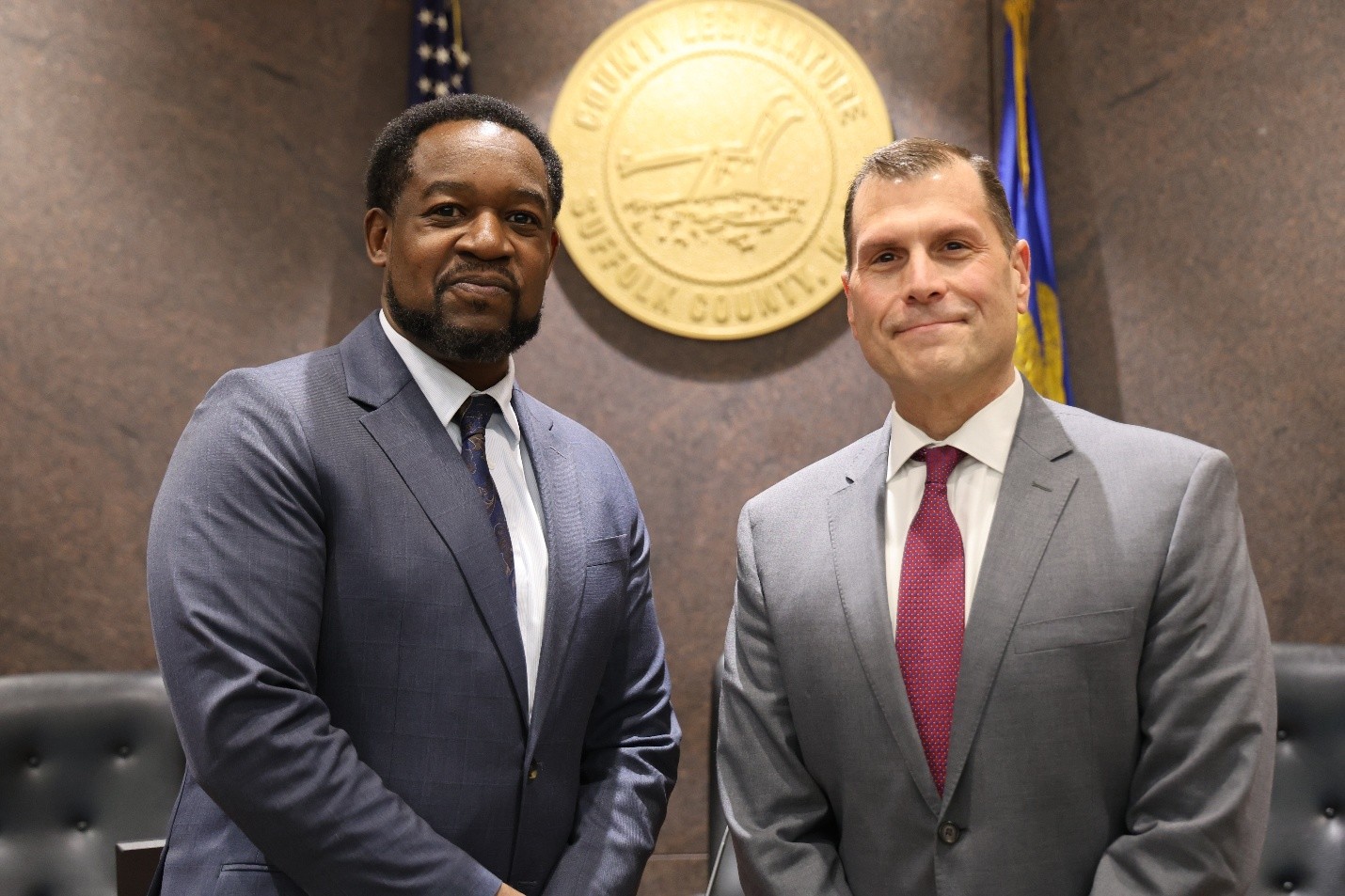
Ty Fuller, Incoming Chair of LICAP and Jeff Szabo, Outgoing Chair
Ty Fuller, Director of Strategic Initiatives and Lead Hydrogeologist, will serve as Chair of the Long Island Commission for Aquifer Protection (LICAP). Fuller will serve the remainder of the term of outgoing Chair Jeff Szabo, who is stepping down at the end of this year.
The Chairmanship of LICAP rotates on a two-year basis. Under this structure, a representative of the Suffolk County Water Authority will hold the role through December 31, 2026.
Fuller has been one of the driving forces behind LICAP for many years and has played a central role in advancing its mission to protect Long Island’s sole source aquifer through science-based policy, regional coordination and transparency. His work has supported many of LICAP’s core initiatives, including the State of the Aquifer reports, long-term groundwater planning efforts and data-driven tools designed to inform both policymakers and the public.
In addition to his role at SCWA, Fuller serves as chairman of the Legislative Outreach Committee for the New York Section of the American Water Works Association and is a past Chairman of the Long Island Water Conference. His career has focused on groundwater science, regulatory strategy and the integration of technical analysis into practical policy decisions.
“LICAP was founded to take a holistic, regional approach to protecting our aquifer at a time when Long Island needed clearer coordination and stronger science at the table,” said outgoing Chair Jeff Szabo. “Ty has been deeply involved in that work for many years. His technical expertise, institutional knowledge and commitment to collaboration make him well suited to lead LICAP as it enters its next chapter.”
Fuller assumes the role as LICAP continues its work during a period of significant change for drinking water protection on Long Island. Federal PFAS regulations are evolving, conservation remains critical to managing groundwater levels and seasonal demand, and the region is beginning broader discussions about wastewater reuse and long-term sustainability. LICAP is also preparing to complete its Drinking Water 2050 report, which is intended to guide aquifer management for decades to come.
“I’m honored to step into this role and build on the foundation Jeff and many others have established,” Fuller said. “LICAP has earned credibility by grounding its work in sound science and focusing on practical solutions. That approach will remain essential as Long Island navigates emerging contaminants, conservation challenges and long-range planning for our water resources.”
Since its inception, LICAP has produced the annual State of the Aquifer reports, completed the Groundwater Resources Management Plan with more than 100 actionable policy recommendations, launched WaterTraq as the region’s first unified water quality reporting platform, established the Sentinel Monitoring program and developed the Our Water Our Lives public education campaign. These efforts have helped elevate groundwater protection across Long Island and inform decisions at every level of government.
About LICAP:
The Long Island Commission for Aquifer Protection (LICAP) was established in 2013 and is the only bi-county organization dedicated to the long-term preservation of the aquifer, the primary source of all drinking water on Long Island. LICAP works collaboratively with stakeholders, such as elected officials, drinking water providers, regulators, environmental advocates and the public to address emerging challenges and ensure the sustainability of this vital natural resource.